Resources
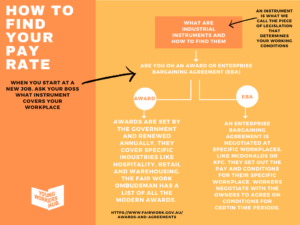
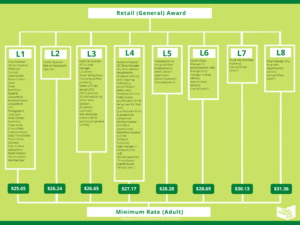
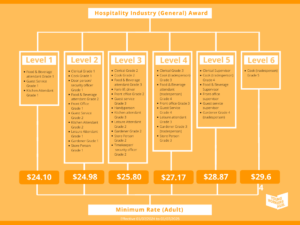
Starting a new job? Want to check you’re getting paid what you deserve?
Have a look at our handy quick guides to make sure you’re all across your rights at work!
Key Links to Government Sites
- Australian Government’s Office for Youth
- The Fair Work Ombudsman
- Fair Work Commission (search for pay rates and conditions using the ‘Pay and Conditions Tool’.
Know Your Workplace Rights
Your Rights as an Apprentice
Key Rights
1. TAFE fees must be reimbursed or paid for by your employer
2. If you are 21 or older when you started your apprenticeship you are entitled to higher adult wage rates
3. You must be paid for all hours worked including overtime
4. As an apprentice you cannot be fired for exercising a workplace right or refusing to work in unsafe conditions
5. Your employer has a duty of care to you as an apprentice, to make sure you are correctly supervised and not treated poorly at work
National Employment Standards – What’s in it for you!
Workplace Bullying – know your rights
Right to Disconnect – know your rights
Information for First Nations Young Workers
In addition to getting to know your workplace rights as a young worker, First Nations young people have some additional pressures and responsibilities relating to your home and community life. These include some cultural issues which some employers may need to learn about and understand:
- The importance of family and kinship ties
- Cultural obligations
- Significant dates and cultural events
- The need for time away from work for issues like Sorry Business
Many First Nations people also play important roles in caring for children and elderly family members outside of your immediate family.
If you need help to support any of these additional issues, you can apply for a flexible work arrangement which may include working part time, changing your hours of work, or even being able to work from home on particular occasions.
You can find further information about Flexible Work Arrangements and how to apply for them on the Fair Work Ombudsman’s website.
In some workplaces, your award or agreement may provide for additional leave arrangements for significant cultural events and dates including:
- NAIDOC week
- Sorry Day
- National Reconciliation Week
- Local and regional events
If you need to take time off for Sorry Business, you might be able to take it as compassionate leave which is available where someone in your immediate family or household dies or has a life-threatening illness or injury.
Otherwise you can apply for and take annual leave, unpaid leave or time off in lieu if that applies in your workplace.
Information for Young Migrant Workers
Work Visas
Like all migrant workers, young migrant workers have the same rights and entitlements as other Australian workers under the Fair Work Act and under work health and safety laws.
Migrant workers have these rights and protections regardless of their immigration status including when a migrant worker has:
- Breached a condition of their visa
- Doesn’t have work rights, or
- Doesn’t have a right to be in Australia
For example, even if you have breached a visa condition, you can still ask for help to receive your minimum entitlements and your employer is obliged to pay or provide them.
It’s also important to know the rules of your visa because it may limit the type of work you can do in Australia. For example, your visa may have rules that restrict the number of hours you can work every week (for example, international students), or what type of job you can do (for example, a seasonal worker).
You can check for further information at the Fair Work Ombudsman website about:
- your current visa details and conditions Visa Entitlement Verification Online (VEVO); or
- information on workplace conditions for certain visa types (482 and 457 visa holder’s workplace rights and entitlements)
More information is available at Visa protections – pilot programs
Pacific Australia Labour Mobility Scheme
The Pacific Australia Labour Mobility Scheme (the PALM scheme) is available to eligible Australian businesses to employ workers from nine Pacific Islands and Timor-Leste when there aren’t enough local workers available.
All employees under the PALM scheme have the same workplace entitlements and protections as other employees in Australia.
You can find more information about the PALM scheme by visiting the Fair Work Ombudsman’s website at Pacific Australia Labour Mobility scheme – or at the Fair Work Ombudsman website.
Information for Young Workers with a Disability
All employees, including employees with a disability working in Australia have workplace rights, including for minimum wages and conditions of employment.
Importantly, all employees have a right to a safe and respectful workplace, free from discrimination, including discrimination on the basis of impairment or disability, bullying or harassment.
Disability Discrimination in the Workplace
It is unlawful for an employer to discriminate against a prospective employee or an employee because they have a disability under the Fair Work Act.
This could include an employer:
- not hiring a potential employee
- offering an employee or potential employee with different and/or unfair terms and conditions compared to other employees
- treating an employee differently to other employees
- causing disadvantage to an employee such as not providing the same minimum entitlements
- changing an employee’s job to their disadvantage
- terminating an employee
It’s also unlawful to discriminate against a person because they have a disability under the Disability Discrimination Act (Cth) or the Anti Discrimination Act (Qld).
Under the Disability Discrimination Act, if a person with a disability can perform the main activities or ‘inherent requirements’ of a job, then they should have an equal opportunity to do that job.
In some cases, an employer may need to make some workplace changes, called ‘reasonable adjustments’, so that the employee can best perform the job, such as providing an enlarged computer screen or installing ramps.
However, employers are not required to make workplace changes if it would cause major difficulties or unreasonable costs. This is called ‘unjustifiable hardship’.
Flexible Work Arrangements
Employees with a disability may request their employer to work under a flexible work arrangement including:
- hours of work – for example, changes to start of finish times
- patterns of work – for example, split shifts of job sharing or part time work
- locations of work – for example, working from home
You can find further information about Flexible Work Arrangements and how to apply for them on the Fair Work Ombudsman’s website.
Supported Wage System
Employees are entitled to be paid a minimum wage under the award that covers their industry or occupation.
However, there is a system – the Supported Wage System – which applies for employees who are not able to perform jobs at the same capacity as any other employee.
Under this system, an individual employee with a disability, must have their work capacity assessed to find out their rate of pay.
This assessment must only be carried out by a qualified independent assessor.
For more information refer to the Fair Work Ombudsman.